The big self-care reset is always next month. The weekend away, the slow morning, the routine that starts once things calm down. Things don't calm down, and the plan turns into one more thing you're behind on.
A small daily self-care ritual is one tiny thing you do on purpose at the same point in your day. Your first sip of coffee, taken sitting down. Three slow breaths before you open the car door. It works because it's small enough to happen on a bad day, and because it comes back tomorrow whether or not today went well.
Why doesn't big self-care happen?
Big self-care needs everything to line up at once: help, money and an open afternoon. An early-morning routine needs you up before everyone, usually after a night when somebody woke you at 2 a.m. So the plan waits for conditions that don't arrive.
Each abandoned plan leaves something behind, too. Self-care starts to feel like one more thing you're bad at, which is the opposite of its job.
Rest scheduled for after the work is rest that never comes, because the work doesn't end. Think of it as topping up a battery: small amounts, often, at the start of the day as much as the end.
How do I build a small daily ritual that sticks?
Tie one tiny action to something you already do. The existing habit becomes the reminder, so you're not relying on remembering it.
Pick one thing, smaller than feels worth it
One song. One cup of tea you actually stop to taste. One slow stretch. If it takes more than five minutes or any setup, shrink it. A single breath counts as a complete ritual.
Hook it to your morning
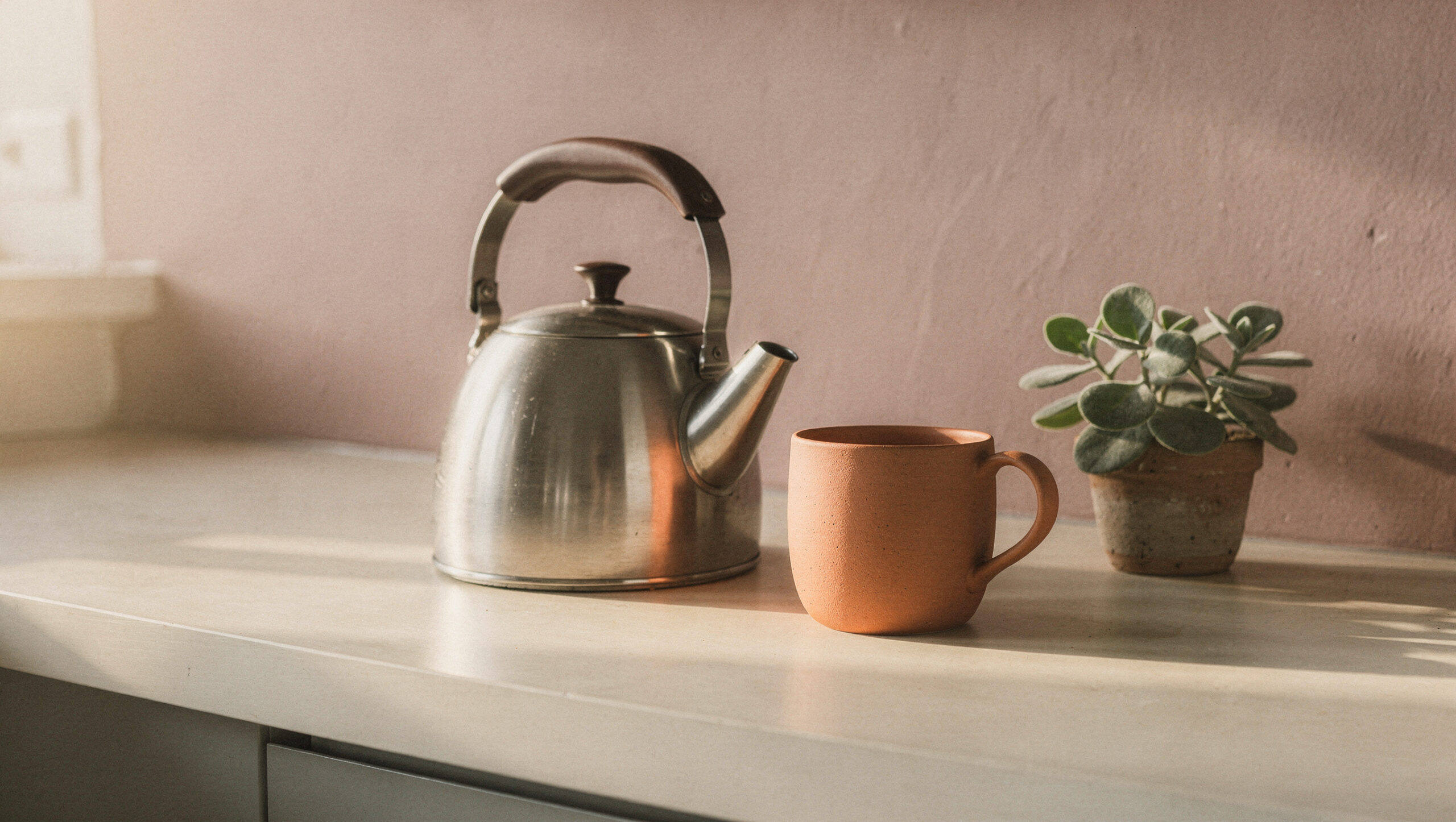
Most mornings have at least one fixed point, even the chaotic ones: the kettle, the coffee maker, the first minute in the car. Each one is a hook. If yours genuinely has none, hook it to the first drink you make rather than to a time. Write your ritual as one sentence with the hook in it, like "While the kettle heats, I stand at the window," or "After the coffee starts, I drink a glass of water." The kettle does the remembering.
Shrink it on hard days
A rough morning gets the smallest version. A missed morning is only a missed morning: no make-up session, no chain to restart. The ritual is there again tomorrow.
What does a daily self-care ritual look like on a busy day?
From the outside, nothing. You stand by the kettle while it boils and look out the window instead of at your phone. Nobody would call it self-care, and it survives a Tuesday because it's that small.
The message underneath it matters more than the minutes: you haven’t disappeared inside everyone else’s needs. You get one small thing for yourself, too.
A ritual has limits. It won't shorten the list or empty a week that has too much in it. It gives you one steady minute inside that week, and that minute is yours.
Key Takeaways
- A small daily self-care ritual is one tiny action tied to something you already do.
- Big self-care waits for time, money and help that rarely line up at once.
- Mornings make good hooks because they repeat, even when they're chaotic.
- Keep it under five minutes with no setup. On hard days, shrink it to one breath.
- Missing one morning doesn’t mean you’ve failed. Begin again the next morning.
Frequently Asked Questions
What's a good daily self-care ritual when you're busy?
Something small, repeatable and tied to what you already do: coffee sitting down, a glass of water while the kettle heats, three breaths before you start the car. Pick the one tiny enough to survive a hard day.
How long should a self-care ritual take?
Five minutes or less. The shorter it is, the more days it survives. On a rough day, one breath counts.
What if my ritual stops feeling like anything?
That's normal once it's automatic, and it isn't a sign to replace it. A ritual that has stopped feeling like an event is one that has become part of the morning, which was the point. Change it if you want to, not because it went quiet.
Next: This post is about choosing one ritual and giving it a hook that helps it stick. If choosing is the part that feels exhausting, self-care when you have no time gives you five simple options so you can decide once and stop deciding.