Four o'clock. The light outside has gone flat, dinner isn't started, one child is starting up about a sock and the other is running laps around the table. The overhead light is on full, and everything under it looks a little louder.
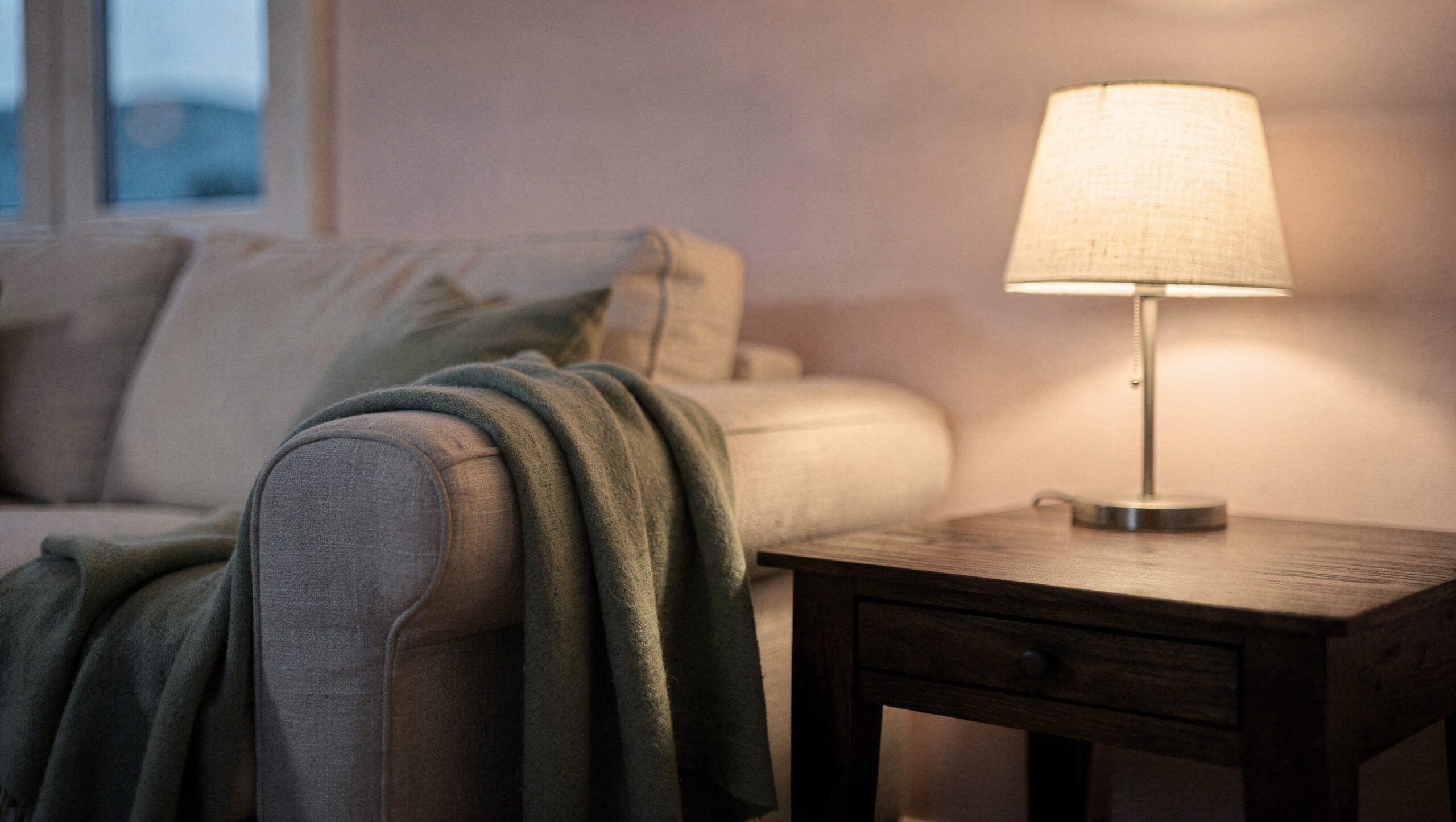
Before the witching hour peaks, turn off the big overhead light and turn on the lamps. Pick a time, like four o'clock, and make it the switch. Softer light makes the room easier to be in at that hour, and it takes about thirty seconds. Every lamp you own counts, including the little one over the stove. One lamp is enough, and a string of fairy lights does the same job.
What is the witching hour?
It's the stretch in the late afternoon and early evening when small children tend to get fussy, wild or clingy, usually right when dinner needs making. Parents describe it at every age, from newborns to toddlers and beyond.
Why turn the lamps on?
Witching-hour guides for parents suggest dimming the lights and keeping stimulation low as the evening comes on. A dimmer, warmer room is easier to be in when everyone's tired.
Most of that advice is aimed at settling the kids. The mom in the room is running on the same empty tank at the same hour.
The lamp is for you as much as for them. Turn it on because the hardest hour of your day deserves softer light too.
How do you make 4 p.m. lamp time a habit?
Pick the time once
Four o'clock, or whenever the light starts to fade where you live. Same time most days, so it's one less decision.
Switch off the big light first
Overhead off, then lamps on. The light under the kitchen cabinets and the one on the stove hood count too. Keep enough light to see what everyone is doing. Softer, not dark.
Give a child the job
If a lamp has a switch a child can reach safely, let them be the one who turns it on. A small job can make the change feel like theirs too.
Lower one more thing
Turn the TV down a notch or put on quiet music. Softer sound on top of softer light.
What if dinner needs bright light?
Keep the light on over the spot where you're chopping, and dim everywhere else. The play space gets the lamps. If the overhead is the only light in the kitchen, leave it on and turn the lamps on in the next room instead. (If dinner time is also when you forget to eat, see eat when you feed the kids.)
What if it's still bright at 4 p.m.?
In summer, draw a curtain halfway instead. The idea stays the same in every season: a softer room at the hardest hour.
What does it look like on a weeknight?
The clock on the oven says 4:00. You flick off the overhead light on your way past, and the room drops a shade. Your oldest runs to the lamp by the couch, because that's her job now. The corner goes warm. The crying about the sock carries on for a minute, then fades into the blocks, the way it probably would have anyway. The room is easier to stand in while it does. You fill the pasta pot in the light over the stove. It's the same evening. It feels a little less sharp at the edges.
Why does a thirty-second change count?
Because it happens every day, even on the worst one. A comfort that takes one flick of a switch survives the evenings when everything else falls apart. It isn't rest, but it follows the same rule: small amounts, often, and on the bad days too.
Key Takeaways
- The witching hour is the late-afternoon stretch when small children tend to unravel.
- At a set time, like 4 p.m., switch off the overhead light and turn on the lamps.
- Softer light makes the room easier to be in, for the kids and for you.
- Keep bright light where you're cooking, and dim the rest.
- In summer, draw a curtain halfway instead.
Frequently Asked Questions
What time is the witching hour?
It usually falls in the late afternoon or early evening, around dinner. It varies by family and by age.
How do you calm the witching hour with a toddler?
Parent guides suggest lowering stimulation: dimmer lights, quieter sound, fewer activities. Turning on the lamps at a set time is an easy place to start.
What if I only have one lamp?
One is enough. The change you want is the overhead light going off, not the number of lamps going on. A single lamp, the light over the stove, or a string of fairy lights all do it.
What if turning the big light off makes it worse?
Then turn it back on. Some kids get unsettled in a dimmer room, and some houses are too dark at four for it to work. Try it for a week, and if it isn't helping, the sound-down half is worth keeping on its own.
For the evenings when the lap and the noise are too much, read touched out as a mom. That one is about what your body needs when everyone has been on you all day. This one is about the room, at a set time, whether or not the day has gone badly.