By late afternoon, the house can feel used up. The air is warm, yesterday's toast still seems to be hanging around, and you've looked at the same four walls since breakfast.
When you're stuck inside all day, open a window for two minutes and let the room change. Stand nearby, feel whatever air comes in, and look past the room instead of at the next thing that needs doing. It doesn't need to become a wellness exercise. The point is simply to give the day a clean break.
Why can the house feel too small after a full day inside?
Nothing dramatic has to happen. The same light, temperature, sounds and unfinished jobs have been in front of you for hours. By afternoon, even a room you like can feel stale.
The usual advice is to get out of the house. Sometimes that's exactly right. Sometimes leaving means finding your shoes, deciding where to go, spending money you didn't plan to spend, or using energy you don't have. A two-minute change in the room is smaller than an outing, which is why it can happen on the day an outing won't.
You don't always need a different day. Sometimes you need one part of this day to feel different from the hour before it.
What changes when you open a window?
The room gets one new thing. Cool air. The sound of rain. Traffic from the next street. The smell of wet pavement or cut grass. A curtain moving where nothing else has moved for a while.
You're still home, and the list hasn't changed. The open window simply gives the afternoon a before and an after. For two minutes, your attention has somewhere to go besides the room and everything waiting in it.
That is all this practice promises. It breaks up the sameness.
How do you make it feel like a real pause?
You already know how to open a window. The only part worth deciding is whether you'll stay there for a minute or open it and immediately start wiping the counter.
Choose the easiest window. Open it enough to feel the air, and stand there. Bring your coffee if it's already in your hand. Look at the farthest thing you can see, or listen if the view gives you nothing. Thirty seconds may be enough. Two minutes may feel good. Close it when you're ready and move on.
No timer is required. There is no right number of breaths, nothing to track and no reason to make it happen every day.
What if the air outside is worse?
Skip the window. Smoke, heavy pollen, a heat warning or bitter cold can make the outside air the wrong choice. The practice is a change in the room, not loyalty to one method.
Move to a different chair. Turn off the overhead light and use a lamp. Run a fan for a minute. Take your drink to another room. Stand at the open front door if that works better. Pick the smallest change that makes the space feel different without creating another job.
What does this look like on an ordinary afternoon?
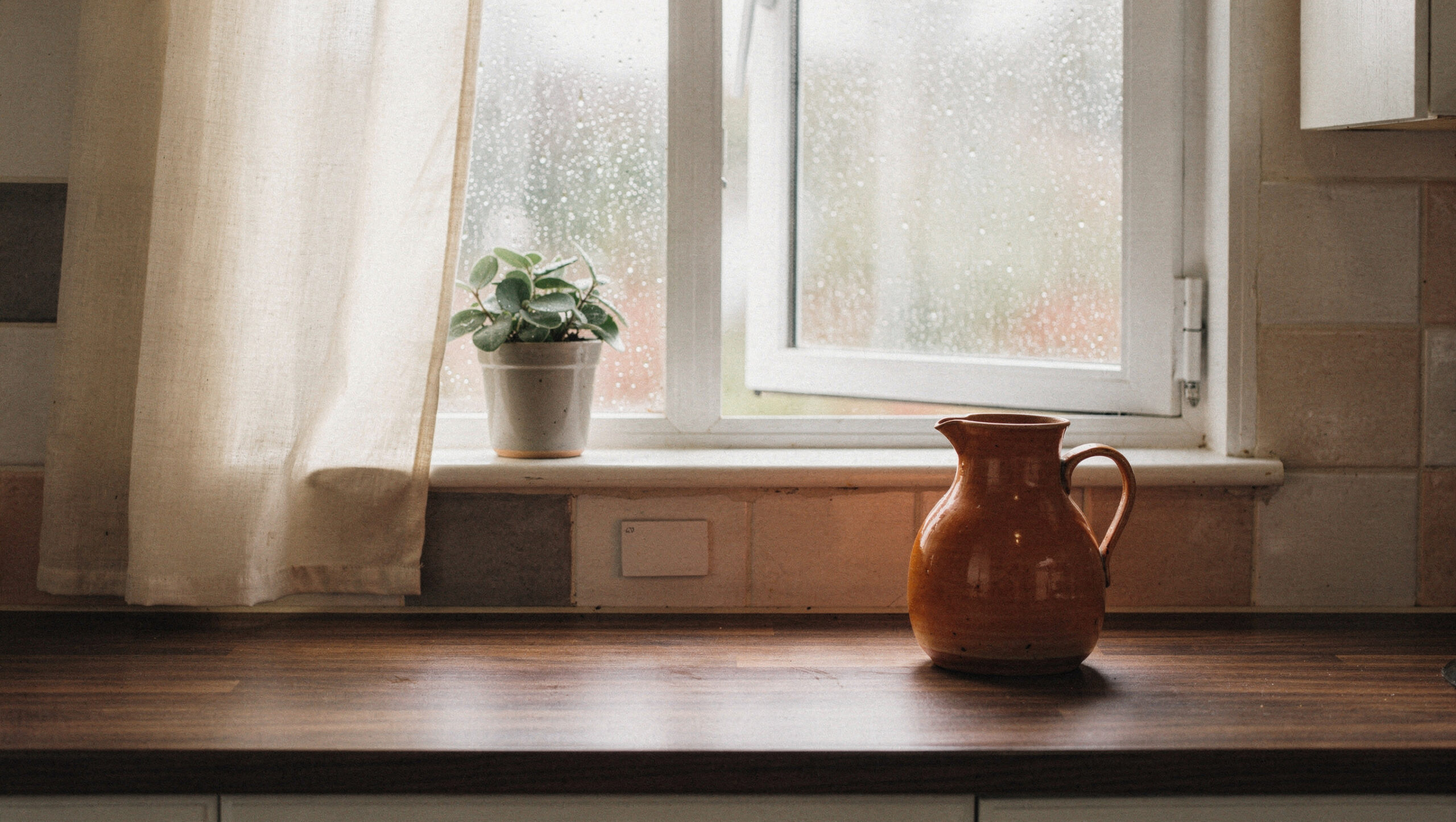
It's 3:47. Your mug has gone cold beside the laptop, and you've been wandering between the same two rooms without settling into either one. You lift the kitchen window. The air smells like rain. Somewhere beyond the houses, a truck changes gears. The curtain moves against your arm.
You stand there long enough for this minute to feel separate from the last one. Then you close the window, warm up the coffee and go back to the afternoon.
Nothing was solved. You still made a small line in the day.
When is a window break worth trying?
Try it when you're restless but don't want another thing to do. When you keep picking up your phone and putting it down. When the room feels close, the afternoon has blurred together, or you want outside without wanting the work of going anywhere.
It won't make a hard day easy. It can give one part of the day a different texture, and sometimes that is enough for two minutes.
Key Takeaways
- When you're stuck inside all day, change the air for two minutes.
- Stay at the window long enough to notice something outside the room.
- Keep it loose: no timer, breath count, streak or daily rule.
- If the outside air is the wrong choice, change the light, chair or room instead.
- The goal is to break up the sameness, not transform the day.
Frequently Asked Questions
Does opening a window count as self-care?
It does when it gives you a real pause and asks almost nothing from you. Self-care can be as ordinary as changing the air and standing still while it happens.
What if I can't open my windows?
Use the smallest available change: a fan, a different room, softer light, or a minute at the open door. The window is one option, not the rule.
How often should I take a window break?
Whenever the house starts to feel stale and the idea appeals to you. There is no schedule to keep and no benefit to forcing it on a day when you don't want it.
What if the house still feels too small afterward?
Then the window was only a small pause. Change rooms, step outside if you can, call someone, or leave the house when you have the capacity. Two minutes of air should never be asked to carry more than two minutes can hold.
For another small practice that fits a full day, read self-care when you have no time.